
Looking for a solution to hide thinning hair on top? Hair extensions are the best for you! Explore the reasons for why.
Thinning hair on top can make your scalp more visible, widen your part line, and make it difficult to achieve the hairstyles you want. Whether your hair has always been fine or you have noticed increasing thinning around your crown, finding the right solution can help you achieve a fuller-looking hairstyle.
But the best extensions for thinning hair on top depend on where your hair is thinning, how much natural hair remains, and whether you need extra volume or direct scalp coverage.
For mild thinning, invisible tape in hair extensions may help add volume if your natural hair is healthy enough to support them. If your crown or part line is visibly thinning, a hair topper may provide more effective coverage. For certain localized bald spots, a hair patch may be a better fit.
This guide explains how these options differ, which situations they suit best, and what to consider before choosing a hair solution for thinning hair.
Which Hair Solution Is Best for Thinning Hair on Top?
The right solution depends on whether your main concern is a lack of volume, visible scalp, or a specific area of hair loss.
| Your Hair Concern | Option to Consider | Main Benefit |
|---|---|---|
| Fine hair with little visible scalp | Invisible tape-in extensions | Adds length and volume |
| Hair that needs temporary fullness | Invisible clip-in extensions | Provides removable volume |
| Widening part line | Hair topper | Covers the part and surrounding scalp |
| Thinning across the crown | Hair topper | Provides coverage over a larger area |
| Localized thinning or a small bald spot | Hair patch | Targets a specific area |
| Extensive thinning across the top | Larger hair topper or wig | Offers broader coverage |
These recommendations are general guidelines. The best choice also depends on your remaining hair density, scalp condition, preferred attachment method, and desired hairstyle.
Why Is My Hair Thinning?
Thinning hair will affect one’s appearance and self-esteem. Individuals with thin hair or bald spots will try various methods to hide their hair’s lack of volume. There are many factors that may cause hair loss or thinning.
According to the AAD, Hereditary hair loss, Age, Alopecia areata, Cancer treatment, Childbirth, illness, or other stressors, Hairstyle pulls on your scalp, Hormonal imbalance, Scalp infection, Medication, and other factors can lead to thinning hair or loss.
Mild Thinning: Your Hair Looks Flat or Lacks Volume
If your hair is naturally fine, your ponytail feels thin, or your ends look sparse but your scalp is not noticeably exposed, lightweight hair extensions may help create a fuller appearance.
Invisible tape-in extensions can add density beneath your natural hair, while invisible clip-in extensions offer a temporary option for special occasions or occasional styling.
The key is ensuring that your natural hair can safely support the attachments and conceal them.
Moderate Thinning: Your Part Line or Crown Is Becoming Visible
If your part line has widened or your scalp is increasingly visible around the crown, traditional extensions may not address your main concern.
A hair topper is often more suitable because it covers the thinning area directly instead of simply adding hair underneath your existing layers.
More Advanced Thinning: You Have Visible Bald Spots
If you have a clearly defined bald spot or substantial thinning across the top of your head, you may need a hairpiece that provides direct scalp coverage.
A hair patch can be suitable for certain localized areas, while a larger topper or wig may be more appropriate for extensive thinning. The choice depends on the size of the affected area and the attachment system you can safely use.
If your hair loss is sudden, progressing, or unexplained, consult a dermatologist to identify the underlying cause before relying on a cosmetic solution.
Best Hair Extensions for Mild Thinning
Traditional hair extensions are primarily designed to add length and volume. They can help make fine hair look fuller, but they need sufficient natural hair for secure attachment and coverage.
Two options worth considering are invisible tape-in extensions and invisible clip-in extensions.
1. Invisible Tape-In Extensions
Invisible tape-in extensions are an option for people with fine or mildly thinning hair who want additional volume without a bulky-looking installation.
They attach to sections of natural hair using adhesive tabs. Their flat profile can help them blend discreetly when they are installed correctly and concealed by enough surrounding hair.
Why choose invisible tape-ins?
-
Flat attachment: Designed to lie close to the head for a discreet appearance.
-
Added fullness: Helps increase the apparent density and length of natural hair.
-
Flexible styling: Can blend with different hairstyles when placement and coverage are appropriate.
However, tape-ins are not suitable for every type of thinning hair. The natural hair supporting each tab must be strong enough to carry the added weight, and the attachment points need adequate coverage.
If your crown is visibly thinning or your hair is fragile and breaking, tape-ins may not be the best option. Excessive weight or repeated tension can contribute to breakage and traction-related hair loss.
2. Invisible Clip-In Extensions
Invisible clip-in extensions are designed for temporary styling. They attach to your natural hair with small clips and can be removed when you no longer need the added volume.
They may be useful if you want a fuller hairstyle for a special occasion without committing to a longer-term installation.
Why choose clip-ins?
-
Easy to remove after use.
-
Convenient for occasional styling.
-
Allow you to add volume where your natural hair can safely support the clips.
-
Do not require a permanent adhesive installation.
However, clip-ins are not automatically suitable for thin hair. If your natural hair is too sparse to conceal the clips, the attachment points may be visible. Clips can also place excessive tension on fragile strands if they are too heavy or positioned poorly.
Avoid attaching clips to weak, broken, or actively thinning areas. If your main concern is exposed scalp around the crown, a hair topper may offer more effective coverage.
If you're still comparing different extension types for fine or thinning hair, read our guide to What Are the Best Hair Extensions for Thin Hair? to explore more options and find the right fit for your hair.
Hair Toppers for Thinning Hair on Top
For women with visible thinning around the crown or part line, a hair topper is often a more direct solution than conventional hair extensions.
A hair topper is a partial hairpiece designed to cover a specific area of the scalp while blending with the remaining natural hair. Depending on its size and design, it can add coverage, volume, or both.
How Do Hair Toppers Work?
A hair topper consists of a base that carries the hair fibers and an attachment system designed to hold it in place.
Some toppers feature monofilament or other specialized base materials that help create a scalp-like appearance. The hair is attached to the base to support a natural-looking part or crown.
Many toppers use clips that attach to surrounding natural hair, although other attachment systems are available.
Unlike traditional extensions, which add hair to existing sections, a topper sits over the thinning area. This makes it particularly useful when your scalp is visible through your natural hair.
How to Choose the Right Hair Topper
Choosing the right topper involves more than matching your hair color. Consider these four factors.
1. Base size
Measure the thinning area and choose a base that provides enough coverage around its edges. A base that is too small may leave visible gaps, while a larger base may be unnecessary for a small area.
2. Hair density
Choose a density that blends with your existing hair. A topper that is significantly fuller than your natural hair may look less realistic, particularly around the edges.
3. Color and texture
Match the topper to your roots, overall color, and natural texture. The closer the match, the easier it is to blend the hairpiece with your own hair.
4. Attachment method
Clip-in toppers require enough suitable surrounding hair to support the clips. If your hair is very fragile or there is little hair available for attachment, seek professional advice about alternative options
If you are new to toppers, our guide to how hair toppers can boost confidence explains how they can help create a fuller-looking hairstyle.
Hair Patches for Localized Thinning and Bald Spots
A hair patch is designed to cover a particular area rather than add volume throughout the head.
Depending on its shape, base construction, and attachment method, a hair patch may be suitable for certain localized areas of thinning, including some bald spots near the front or top of the scalp.
When Should You Consider a Hair Patch?
A hair patch may be worth considering if you have:
-
A small, clearly defined area of hair loss.
-
A localized thinning spot that is difficult to conceal with styling.
-
A specific area that needs coverage without a full-head hairpiece.
The most important consideration is the size and location of the affected area. The patch must provide enough coverage, blend with the surrounding hair, and use an attachment method appropriate for your scalp.
Some hair patches use adhesive attachment systems. If your scalp is sensitive, irritated, or affected by a skin condition, seek professional advice before using adhesives.
A hair patch is not automatically suitable for every bald spot or receding hairline. The base design, attachment requirements, and condition of the surrounding hair all influence the final result.
Still deciding between a patch and a topper? Read our guide to hair patches vs. hair toppers to understand the differences in coverage and application.
Can You Combine Hair Extensions With a Topper or Hair Patch?
Yes. Combining products can help address different concerns in different areas, provided your natural hair can safely support the attachments.
For example, a topper can cover a thinning crown while tape-in extensions add length to the lower sections of your hair. A hair patch may also be combined with removable clip-ins to address localized thinning while adding volume elsewhere.
However, combining products is not always necessary.
If your main concern is visible scalp rather than hair length, a topper alone may provide sufficient coverage. Adding several products can increase the overall weight and attachment burden, potentially stressing fragile hair.
For the most natural-looking result, choose products according to the specific areas that need coverage instead of automatically combining multiple types.
How to Choose Hair Solutions Without Worsening Thinning
When your hair is already fragile, protecting your existing hair is just as important as achieving a fuller appearance.
Hair extensions and attachment-based hairpieces can place tension on natural hair. Repeated or prolonged pulling may contribute to traction alopecia, a type of hair loss caused by ongoing tension.
Follow these precautions when choosing and wearing hair extensions or hairpieces.
Choose an Appropriate Weight
Avoid adding more hair than your natural strands can comfortably support. Fine or fragile hair may require a lighter installation than thicker hair.
Avoid Tight or Painful Attachments
An installation should not cause pain, persistent pulling, headaches, or scalp discomfort. If you experience these symptoms, have the product loosened or removed promptly.
Protect Fragile Areas
Do not attach extensions to broken strands or place clips where the hair is already sparse and weak. If you have active hair loss, consult a qualified professional before choosing an attachment-based product.
Follow the Correct Removal Process
Adhesive extensions should be removed using the appropriate removal method. Pulling tape tabs or bonded extensions out of your hair can cause breakage.
Monitor Your Hair and Scalp
Stop using a product if you notice increased breakage, pain, redness, irritation, or worsening hair loss. If thinning is new or progressing, a dermatologist can help identify the cause and discuss suitable treatment options.
Other Ways to Make Thinning Hair on Top Less Noticeable
Hair extensions and hairpieces are not the only options for creating the appearance of fuller hair. Depending on your preferences, simple styling changes may also help.
Change your parting. A different part can sometimes make a widened part line less noticeable, depending on your natural growth pattern.
Choose a suitable haircut. A cut that works with your natural density can create the appearance of more volume without adding unnecessary weight.
Use lightweight styling products. Heavy products can flatten fine hair. Lightweight volumizing products may help lift the roots without weighing the hair down.
Consider temporary accessories. Headbands, scarves, and other accessories can provide styling flexibility, although they may not cover every area of thinning.
Address the underlying cause. If your hair is thinning progressively, a dermatologist can help determine whether an underlying condition or other factor requires treatment.
For more styling ideas, read our guide to 10 useful ways to hide thin hair or a receding hairline.


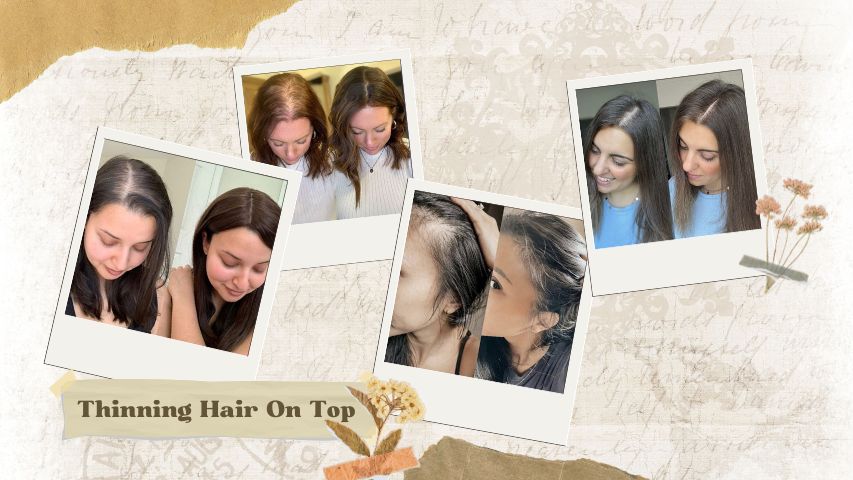
Before and After hair extensions for thin hair on top
With these hair extensions, it is simple to transform your hair from thin to thick. Check the pictures before and after to see how extensions hide thinning hair on their top.
Frequently Asked Questions
What are the best extensions for thinning hair on top?
For mild thinning with enough healthy natural hair, lightweight invisible tape-in extensions may add fullness. For visible scalp around the crown or part line, a hair topper is often more suitable. A hair patch may be appropriate for certain localized bald spots.
Can hair extensions hide thinning hair on top?
Hair extensions can make hair look fuller when enough natural hair is available to support and conceal the attachments. They do not directly cover exposed scalp, so a topper or hair patch may be a better option for more noticeable thinning.
Are invisible tape-in extensions good for fine hair?
They can work for some people with fine hair, provided the natural hair is healthy enough to support the tabs and conceal them. They are not suitable for every case of thinning or hair loss.
What is better for a thinning crown: extensions or a hair topper?
A hair topper is generally more suitable when the crown is visibly thinning because it covers the scalp directly. Traditional extensions primarily add hair beneath existing layers and rely on natural hair for attachment and concealment.
Can hair extensions make thinning hair worse?
Yes. Excessive weight, repeated pulling, tight installation, and improper removal can contribute to breakage or traction alopecia. Choosing an appropriate product and installation method can reduce some risks, but no extension method is completely risk-free.
What is the difference between a hair topper and a hair patch?
A hair topper generally covers a larger area, such as the crown or part line, while a hair patch is designed for more targeted coverage. The actual coverage depends on the size and design of the hairpiece.
Should I use extensions if I am experiencing active hair loss?
It is best to identify the cause of active hair loss before choosing an attachment-based product. Extensions can place stress on fragile hair, and some forms of hair loss require medical evaluation. A dermatologist can advise you on appropriate treatment and styling options.
Conclusion: Find the Right Solution for Thinning Hair on Top
Though thinning hair make concern, it doesn’t mean that you cannot enjoy the hair you dreamed of. Extensions can solve the problems of hair loss on top/side, add volume & fullness, and restore your confidence. Ranging from tape-ins, clip ins, hair toppers, to hair patches - there are different types of extensions to suit individuals' needs. You can get thicker and beautiful hair once more without the need for permanent medication treatment or surgery.
The best solution for thinning hair on top depends on whether you need extra volume, coverage around your crown, or help concealing a localized area of hair loss.
Invisible tape-in extensions may help add fullness to mild thinning when your natural hair can safely support them. A hair topper generally provides more direct coverage for a thinning crown or widening part line, while a hair patch may be suitable for certain localized areas.
Before choosing a product, consider your natural hair density, the size of the thinning area, the attachment method, and your maintenance preferences.
With an appropriate fit, suitable coverage, and careful use, you can create a fuller-looking hairstyle while keeping the health of your natural hair.


